1Stoop 1, New York County
Interior Renovation in Manhattan
Renovation for apartments inside large buildings, from the Garment District to the Upper East Side and Hamilton Heights.
Renovation in Manhattan
Manhattan is where the Palm Home Improvement office is, at 37 West 37th Street in the Garment District, and it is the borough where renovation is most often an apartment inside a larger building. The Census Bureau's 2024 American Community Survey counts 807,083 occupied homes in New York County: 206,186 owned and 600,897 rented, so 74 percent of households rent. Of the 932,314 housing units, 533,208, or 57 percent, are in buildings of 50 or more units, and only 7,907 are detached houses. The median year those homes were built is 1951.
Those numbers shape the work. An apartment renovation happens inside a building with a shared roof, shared risers, neighbors above and below, and a managing agent or landlord who sets the rules. Kitchens and baths sit on plumbing stacks that serve every floor, so layouts tend to work around them rather than move them. Floors have to carry sound as well as weight, working hours are limited, and deliveries move through elevators and lobbies. A scope that names these constraints at the start is the difference between a renovation that keeps moving and one that stalls.
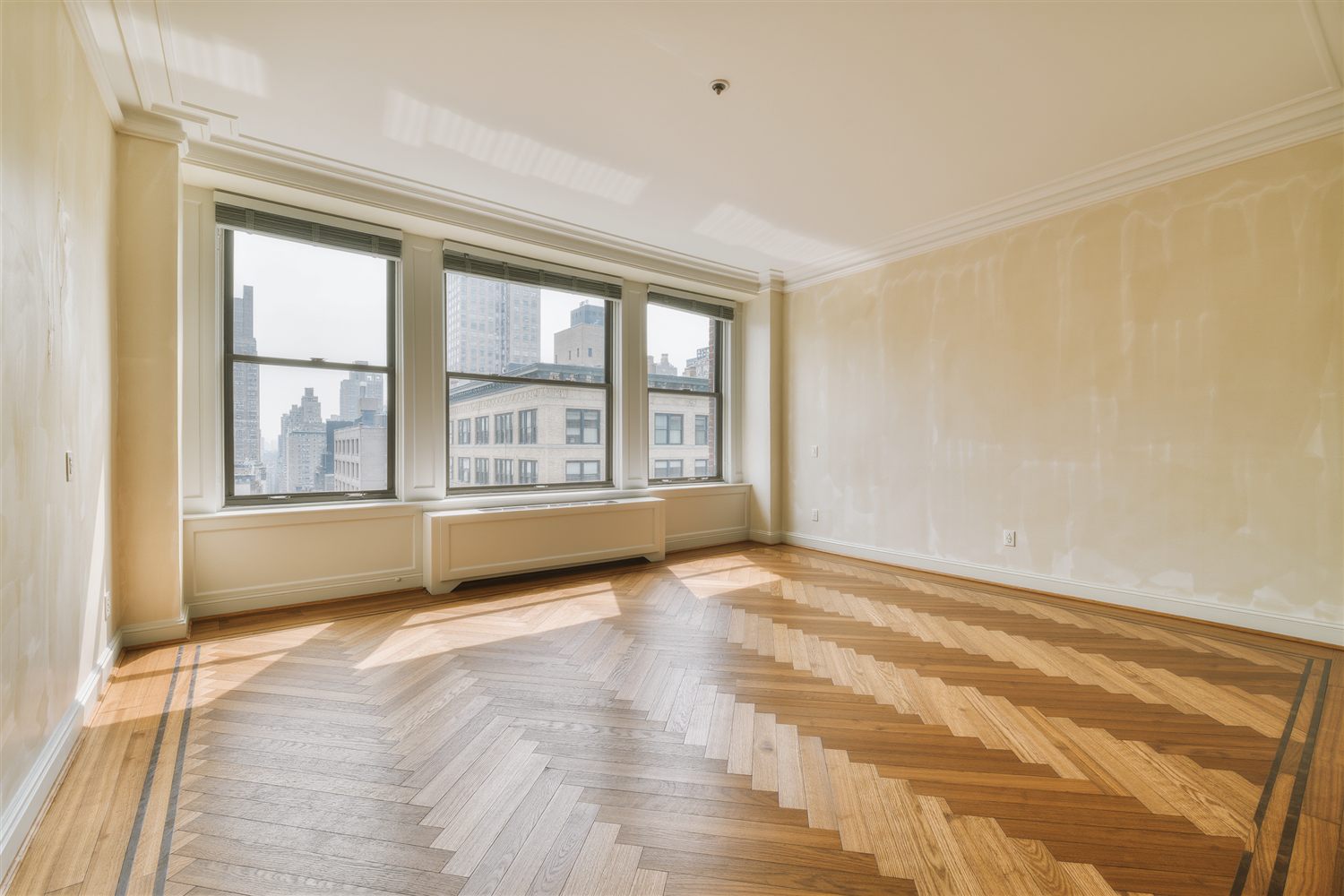
Nearly three quarters of the borough rents, and renovation by a tenant starts with the lease. A lease normally spells out whether alterations are allowed and who must approve them, so ask for permission in writing before ordering anything. Owners of co-op and condo units work from their building's alteration rules, which commonly call for plans, the contractor's details and approval before work begins. Bring the building's requirements to the first walkthrough and the scope can be written to fit them.
The result we plan for is a finished interior that suits the building: a kitchen with cabinets set level and tight, a bathroom with a tested shower pan and clean tile lines, floors laid over a flat base and walls that look smooth in window light, handed over after a walkthrough of every room.
A typical Manhattan project starts with a request to the building and ends with a walkthrough. Before demolition we gather the building's alteration requirements, the working hours, the delivery route and the elevator schedule, and the scope is written to fit them. The floor plan is measured and drawn, each room's finishes are listed, and the order of trades is set so the plumber, the tile setter and the painter arrive in sequence. Protection goes down in the hall, the lobby path and the elevator before materials move in. Each week the owner sees the work in place and signs off on what has been completed, so there are no surprises at the end. Whether the job is a single bathroom on a high floor or a full apartment, the process is the same: written scope, building approved, work protected, rooms checked.
Neighborhoods and landmarks
The Garment District, where the office sits in ZIP code 10018, is generally the area between Fifth and Ninth Avenues from 34th to 42nd Street. Its National Register historic district runs roughly from Sixth to Ninth Avenue and from West 35th to West 41st Street. By 1910, about 70 percent of the nation's women's clothing was produced in New York City, and in 1987 the city created the Special Garment Center District zoning to help preserve garment manufacturing.
On the Upper East Side, ZIP codes 10021, 10028 and 10128 cover townhouses and mansions from the early twentieth century, later apartment buildings and 1950s high-rise blocks such as Manhattan House, along with Museum Mile on Fifth Avenue. In Hamilton Heights, ZIP code 10031 between 135th and 155th Streets, spacious apartment buildings, brownstones and row houses date mostly from the late 1800s and early 1900s, and the Hamilton Heights Historic District is a New York City landmark.
Permits and approvals in Manhattan
- The Department of Buildings states that most construction in New York City requires approval and permits, and some job filings must be submitted online in DOB NOW: Build.
- Plumbing work, including fixture replacement, must be performed by a Licensed Master Plumber.
- In a historic district such as Hamilton Heights, the Landmarks Preservation Commission's permit guide covers exterior elements like windows and doors. Check with the Commission before any change visible from the street.
Sources: [1] nyc.gov [2] nyc.gov [3] nyc.gov [4] nyc.gov
Every floor, in Manhattan
Townhouse Renovation
Stair halls, parlor floors and top-to-bottom work on row houses.
Top floorDrywall and Painting
Sheetrock, taping, skim coats and paint that stays smooth.
Third floorBathroom Remodeling
Porcelain and marble tile, waterproofing and new fixtures.
Parlor floorFlooring and Tiling
Wood floors, herringbone patterns and tile set over a flat base.
Garden floorKitchen Remodeling
Cabinets, counters, backsplash and a layout that works.
CellarDemolition
Protected, controlled tear-out and haul-away.
Every floorGut Renovation
Down to the studs and back up as a finished interior.
Questions about renovating in Manhattan
Do I need my building's approval before renovating an apartment?
Co-op and condo buildings typically have alteration rules, and rental leases usually address alterations. Ask your managing agent or landlord for the requirements in writing before you finalize the scope.
Can I move a kitchen or bathroom in a Manhattan apartment?
Fixtures connect to plumbing stacks that serve floors above and below, so moves are limited. The Department of Buildings says most construction needs approval, and plumbing work must be done by a Licensed Master Plumber.
Why are working hours limited in Manhattan buildings?
Apartments share walls, floors and stairwells, and many buildings set hours for noisy work. Ask your building for its hours and give them to the contractor before demolition is scheduled.
How are deliveries handled in an elevator building?
Cabinets, tile and appliances move through service entrances or freight elevators on a schedule the building sets. Deliveries and storage are planned with the building before materials are ordered.
Where is your office?
At 37 West 37th Street, 3rd floor, in the Garment District, ZIP code 10018. The neighborhood sits between Fifth and Ninth Avenues from 34th to 42nd Street.
Which Manhattan neighborhoods do you quote in?
All of them, including the Garment District, the Upper East Side in ZIP codes 10021, 10028 and 10128, and Hamilton Heights in ZIP code 10031.
Do I need to think about lead paint in Manhattan?
The median year Manhattan homes were built is 1951, so many pre-date 1978. For a home built before 1978, the EPA recommends hiring a lead-safe contractor trained in lead-safe work practices.
Sources: [1] censusreporter.org [2] en.wikipedia.org [3] en.wikipedia.org [4] en.wikipedia.org
Other boroughs
Find the office
Ready to renovate in Manhattan?
Send the rooms, the neighborhood and what you want to change. We will reply by email with the next step.