4Top floor
Drywall and Painting in New York
Sheetrock, taping, skim coats and paint finished in the order that makes walls look smooth under real light.
Walls decide how a renovated room feels, and in New York they are often the hardest surface to get right. Older buildings have plaster over lath, patched ceilings, cracked corners and walls that wander out of plumb. A good drywall and painting job straightens what can be straightened, hides what cannot, and leaves a surface that looks flat in raking light from a window.
Drywall work is a sequence of coats. Sheets are hung with the long edge across the studs, screws are set just below the paper surface, and seams and corners are taped and covered with joint compound in three thin coats, each sanded smooth before the next. A skim coat over an old plaster wall gives a uniform base for paint. Moisture-resistant board goes behind tile in baths and kitchens, and fire-rated board goes where a rated assembly is required.
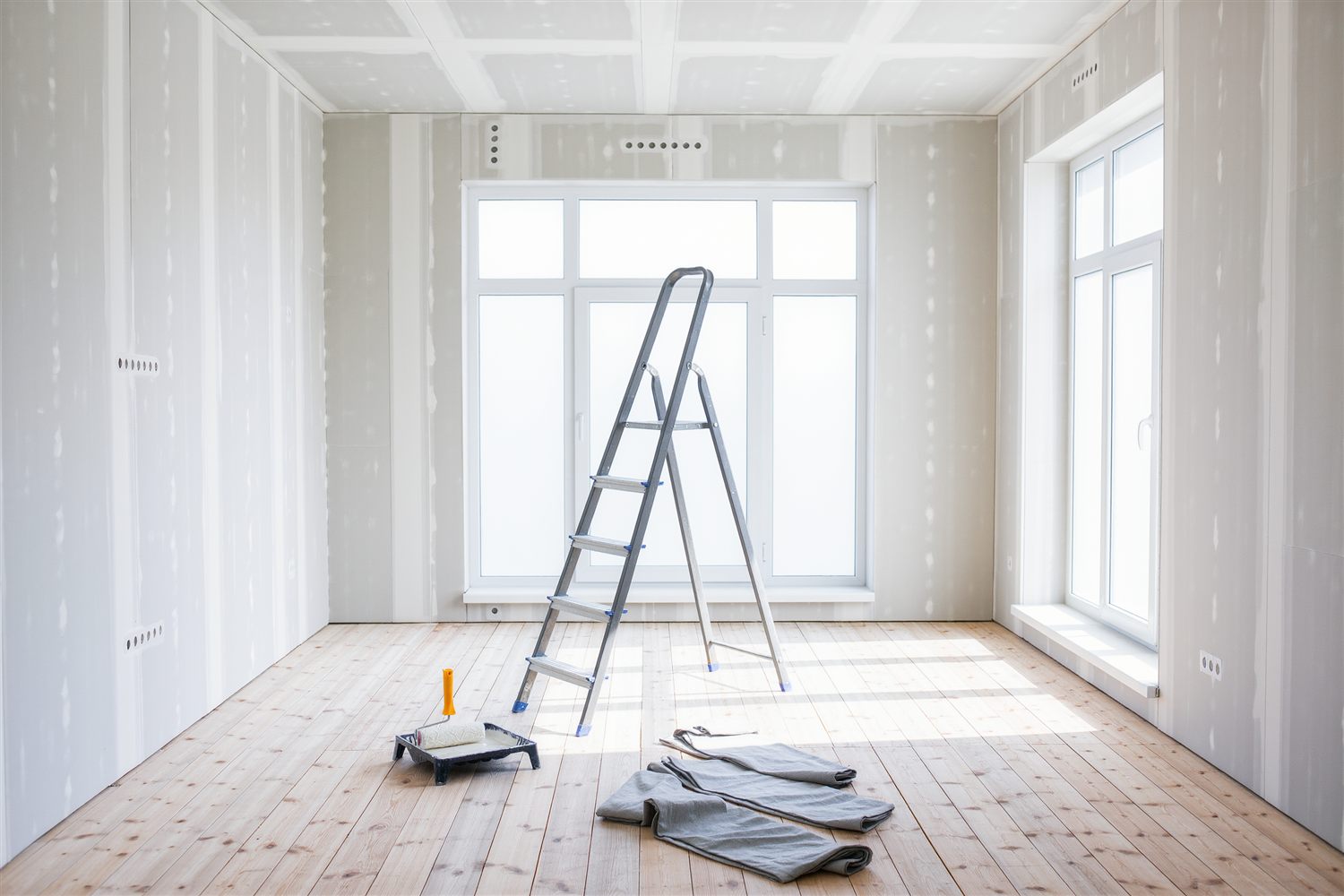
Painting finishes the work and shows its quality. Surfaces are cleaned and primed, patches are spot primed so they do not flash through the final coat, and two finish coats are applied with brush and roller. The sheen is chosen to suit the room: flat for ceilings and quiet walls, eggshell or satin for living areas, semi-gloss for trim and doors. A tight cut line where the wall meets the ceiling, window or trim is the mark of careful work.
Choices that shape a finish
- Taped and finished seams
- Skim coat
- Plaster repair
- Moisture-resistant board
- Fire-rated board
- Primer and sealer
- Satin and eggshell
- Trim and door paint
Preparation is most of the work. Cracks are routed and filled, loose paint and plaster are scraped back to sound material, holes are patched with backing so they do not telegraph, and glossy surfaces are sanded so new paint can grip. Furniture is moved or covered, floors are protected with rosin paper or drop cloths, and the dust from sanding is contained with plastic sheeting and a vacuum on the sander.
Joint compound finishes are rated by levels. A paint-ready wall wants a high-quality finish with a skim coat in raking light, while a wall that will be covered with heavy texture or tile can stay at a lower level. Tell your contractor how the room will be lit, since low sun from a window and a long hallway show defects that a ceiling light hides. Flat paint hides surface flaws, and a higher sheen makes them more visible.
Paint color is a decision to make with samples on the wall. Look at the color in the morning, afternoon and evening, next to the floor, the counter and the trim. White ceilings and trim keep a room crisp, and a warm white on the walls suits north-facing apartments. Use paints with low odor and low volatile compounds in occupied homes, and allow the full cure time before hanging art or moving furniture against the wall.
Plan the sequence so the walls are not finished twice. Electrical boxes, recessed lights and vents are set before the board goes up, and any plumbing work inside the walls is completed and inspected before they close. Doors and windows are measured so trim returns land cleanly, and corner bead is used on outside corners so they stay straight when furniture bumps them. Paint goes on only after the dust is gone, which is why we sand first, vacuum the room, wipe the surfaces and prime in that order. The finish you see is the last coat of a long list of steps, and the care taken at the start shows in the light from every window.
How the work runs
Inspect the walls
Cracks, patches, moisture marks and out-of-plumb sections are noted and the right repair is chosen.
Hang and tape
New board is hung, seams are taped and three coats of compound are applied and sanded.
Prime and prepare
Surfaces are cleaned, patched areas are spot primed and the full wall is primed.
Paint and check
Two finish coats go on with a clean cut line, and the room is inspected in daylight and lamp light.
Before work starts
- The Department of Buildings lists painting and plastering among work that does not need a permit. Installing new walls or moving existing ones is different, so confirm what applies before work starts.
- For a home built before 1978, the EPA recommends hiring a lead-safe contractor certified and trained in lead-safe work practices, because sanding, cutting and window replacement can disturb lead-based paint.
- New York City requires a Home Improvement Contractor license, issued by the Department of Consumer and Worker Protection, for residential improvement work.
Sources: [1] nyc.gov [2] epa.gov [3] nyc.gov
Questions about drywall and painting
Can old plaster walls be made smooth?
Yes. Cracks are repaired, loose areas are secured or replaced, and a skim coat of joint compound gives a uniform surface that takes paint evenly.
Why do patched spots show through new paint?
Patches absorb paint differently from the surrounding wall. Spot priming each patch before the full primer coat prevents the flash that shows through the finish.
Do I need a permit to paint or plaster?
The Department of Buildings lists painting and plastering as work that does not need a permit. New walls or structural changes are different, so check your building's requirements before work starts.
How should I plan around lead paint?
If the home was built before 1978, the EPA recommends hiring a contractor trained in lead-safe work practices before sanding or cutting into painted surfaces.
What sheen should I choose?
Flat for ceilings and walls with flaws to hide, eggshell or satin for living areas, and semi-gloss for trim, doors and kitchens that need wiping.
Where this work is done
The same scope applies in every borough, with the housing stock and the building type setting the details. Pick the borough for the local picture.
Other floors
Ready to plan your drywall and painting?
Send the rooms, the borough and what you want to change. We will reply by email with the next step.